
Author results for "ICT"
Found 59 authors matching your search.
A. Victor Coonin

Benedict Anderson
Benedict Carey
Benedict Jacka
Jacka was born in England and attended the City of London School. He later attended Cambridge University, where he graduated with a Bachelors in philosophy and met his editor Sophie Hicks from Ed Victor Ltd. His first novels were three children's fantasy novels that didn’t get published, followed by To Be A Ninja (later changed to Ninja: The Beginning), a children's non-fantasy novel, which was. In 2000 he began working on a fantasy setting with teenage elementals, for which he wrote four unpublished novels. In 2009, he decided to try again with an adult character and a more information-based ability. Three years later, in 2012, he published the first book of the Alex Verus series, two more followed the same year. Jacka married in 2015 to Rolari Kuti. Critical reception for Jacka's work has been mostly positive. Of the Alex Verus series, SF Site has cited the series' characters and chapter cliffhangers as highlights. SF Crowsnest gave an overall positive review for Cursed, while stating it was "an enjoyable, if unchallenging, read".
Benedict of Nursia
Benedict Wallet Vilakazi

Benedict Wells

David Benedictus
David Henry Benedictus (16 September 1938 – 4 October 2023) was an English writer and theatre director, best known for his novels. His work included the Winnie-the-Pooh novel Return to the Hundred Acre Wood (2009). It was the first such book in 81 years.
Elisa Victoria
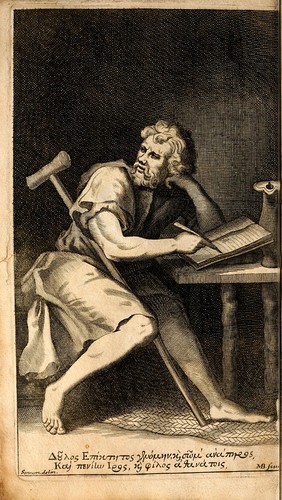
Epictetus
Epictetus (c. 55 – 135 AD) was a Greek Stoic philosopher. He was born a slave at Hierapolis, Phrygia (present day Pamukkale, Turkey) and lived in Rome until his banishment, when he went to Nicopolis in northwestern Greece for the rest of his life. His teachings were written down and published by his pupil Arrian in his *Discourses* and *Enchiridion*. **Source**: Epictetus on Wikipedia.
Frank Victor Dawes
Fundación Victoria Ocampo
Henry Mayhew & Victor E. Neuburg
Ivo Victoria
Jeff Benedict
Klein Victor C
María Victoria Massaro

Marie Benedict

Pope Benedict XVI
Joseph Alois Ratzinger was born in Marktl, Bavaria, Germany, the son of a police officer. At the age of five, he declared that he wanted to be a cardinal. In 1941, he was conscripted into the Hitler Youth, which was mandatory, although his father believe that Nazism conflicted with the Catholic faith. In 1943, while in seminary, he was drafted into the German anti-aircraft corps, although he deserted in 1945. When he returned home he was imprisoned in a POW camp, and returned to the seminary when he was released after a few months. He was ordained in 1951. In 1958 Ratzinger became a professor of Freising College. He moved to the University of Bonn in 1959, the University of Münster in 1963, and the University of Tübingen in 1966, where he was appointed to a chair in dogmatic theology. While he was at Tübingen he witnessed the student movements of the 1960s, which culminated in disturbances and riots in spring of 1968. Although he was seen as a dogmatic reformist, he believed that the radicalization of the student body was a result of a departure from traditional Catholic teachings. In 1969, Ratzinger was moved to the University of Regensburg in Bavaria. In 1972 he co-founded the theological journal Communio. In 1977, Ratzinger was appointed Archbishop of Munich and Freising. That same year he was named Cardinal-Priest of Santa Maria Consolatrice al Tiburtino by Pope Paul VI. In 1981, Pope John Paul II named Ratzinger Prefect of the Sacred Congregation for the Doctrine of the Faith, and he resigned his post at Munich. In 1993 he became Cardinal Bishop of Velletri-Segni. In 2005, he was elected as the next Pope. He chose for himself the name Pope Benedict XVI.
Q Fictionalauthor Zzyzx
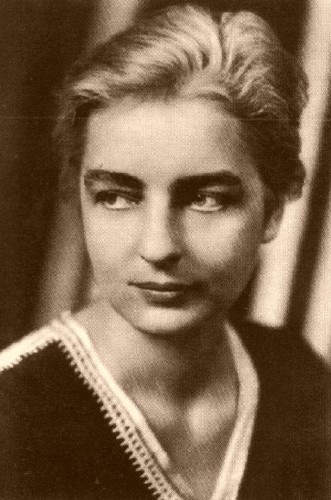
Ruth Benedict
Ruth Benedict (born June 5, 1887, New York, N.Y., U.S.—died Sept. 17, 1948, New York City) was an American anthropologist whose theories had a profound influence on cultural anthropology, especially in the area of culture and personality. Benedict graduated from Vassar College in 1909, lived in Europe for a year, and then settled in California, where she taught in girls’ schools. In 1914 she returned to New York City. For some years Benedict sought vainly for an occupation. In 1919 she enrolled at the New School for Social Research, where the influence of Elsie Clews Parsons and Alexander Goldenweiser led her to study anthropology under Franz Boas at Columbia University. She approached the field of anthropology from a strong humanistic background, and even after she became involved in the field in the 1920s, she continued to write poetry under the pseudonym Anne Singleton until the early 1930s. From the outset of her career in social science she conceived of cultures as total constructs of intellectual, religious, and aesthetic elements. She received her Ph.D. in 1923 for her thesis on a pervasive theme among North American Indians, The Concept of the Guardian Spirit in North America (1923). In 1924 she began teaching at Columbia. Benedict’s first book, Tales of the Cochiti Indians (1931), and her two-volume Zuñi Mythology (1935) were based on 11 years of fieldwork among and research into the religion and folklore of Native Americans, predominantly the Pueblo, Apache, Blackfoot, and Serrano peoples. Patterns of Culture (1934), Benedict’s major contribution to anthropology, compares Zuñi, Dobu, and Kwakiutl cultures in order to demonstrate how small a portion of the possible range of human behaviour is incorporated into any one culture; she argues that it is the "personality," the particular complex of traits and attitudes, of a culture that defines the individuals within it as successes, misfits, or outcasts. Six years later, with the publication of Race: Science and Politics, she refuted racist theory. From 1925 to 1940 she edited the Journal of American Folklore. During 1943–45 Benedict was a special adviser to the Office of War Information on dealing with the peoples of occupied territories and enemy lands. Her long-standing interest in Japanese culture bore fruit in The Chrysanthemum and the Sword (1946). She returned to Columbia in 1946, and in 1947 she was president of the American Anthropological Association. By that time she was acknowledged as the outstanding anthropologist in the United States. Benedict became a full professor at Columbia in 1948, and that summer she began her most comprehensive research undertaking as director of a study of contemporary European and Asian cultures. Upon her return from a trip to Europe, however, she fell ill and died (Britannica). Ruth Fulton Benedict was an American anthropologist and folklorist. Benedict held the post of President of the American Anthropological Association and was also a prominent member of the American Folklore Society (Wikipedia). Ruth Benedict (1887-1948) was one of the most eminent anthropologists of the twentieth century. Her profoundly influential books Patterns of Culture and The Chrysanthemum and the Sword: Patterns of Japanese Culture were bestsellers when they were first published, and they have remained indispensable works for the study of culture in the many decades since (Amazon).
St Benedict

Victor Catala
Victor Cha
Victor Grossman

Victor Hugo
Victor-Marie Hugo was a French poet, playwright, novelist, essayist, visual artist, statesman, human rights activist and exponent of the Romantic movement in France. In France, Hugo's literary fame comes first from his poetry but also rests upon his novels and his dramatic achievements. Among many volumes of poetry, Les Contemplations and La Légende des siècles stand particularly high in critical esteem, and Hugo is sometimes identified as the greatest French poet. Outside France, his best-known works are the novels Les Misérables and Notre-Dame de Paris (known in English also as The Hunchback of Notre-Dame). Though a committed conservative royalist when he was young, Hugo grew more liberal as the decades passed; he became a passionate supporter of republicanism, and his work touches upon most of the political and social issues and artistic trends of his time. He is buried in the Panthéon. ([Source][1]) [1]: http://en.wikipedia.org/wiki/Victor_Hugo

Victor Klemperer
Victor Klemperer (9 October 1881 – 11 February 1960) was a German philologist and diarist. His journals, published posthumously in Germany in 1995, detailed his life under the German Empire, the Weimar Republic, the fascist Third Reich, and the German Democratic Republic. Three volumes of his diaries have been published in English translations: *I Shall Bear Witness, To the Bitter End*, and *The Lesser Evil*. The first two, which cover the period of the Third Reich, have become standard sources and have been extensively quoted. His book *LTI – Lingua Tertii Imperii: Notizbuch eines Philologen*, published in English as *The Language of the Third Reich*, examined how Nazi propaganda co-opted and corrupted German words and expressions. **Source**: Victor Klemperer on Wikipedia.

Victor LaValle
Victor LaValle is the author of the short story collection ***Slapboxing with Jesus***, five novels, ***The Ecstatic***, ***Big Machine***, ***The Devil in Silver***, ***The Changeling***, and ***Lone Women***, and two novellas, ***Lucretia and the Kroons*** and ***The Ballad of Black Tom***. He is also the creator and writer of two comic books Victor LaValle's ***Destroyer*** and ***Eve***. His novel, ***The Changeling***, has been adapted for Apple TV+ and is streaming now. He adapted his novel, ***The Devil in Silver***, for AMC and served as its creator and showrunner. He has been the recipient of numerous awards including the World Fantasy Award, British Fantasy Award, Bram Stoker Award, Whiting Writers' Award, a Guggenheim Fellowship, Shirley Jackson Award, American Book Award, and the key to Southeast Queens. He lives in the Bronx with his wife, the writer Emily Raboteau, and their kids. He serves as the Chair of the Graduate Writing Program at Columbia University. **Photo** Emily Raboteau (Source)
Victor Luckerson

Victor Methos
Victor Methos immigrated to the United States from Kabul, Afghanistan, at the age of nine and wrote his first short story in English at the age of ten. At the age of thirteen, when his best friend was interrogated by the police for over eight hours and confessed to a crime he didn’t commit, Victor Methos knew he would one day become a lawyer. After graduating from the University of Utah School of Law, Methos sharpened his teeth as a prosecutor for Salt Lake City before founding what would become the most successful criminal defense firm in Utah. In ten years, Methos conducted more than one hundred trials ranging from death penalty cases to defending the rights of Native American tribes to practice their religion freely, to suing police departments for civil rights violations. One particular case stuck with him, and it eventually became the basis for his first major bestseller, *The Neon Lawyer*. Since that time, Methos has focused his work on legal thrillers and mysteries, earning a Best Novel Edgar nomination for his title *A Gambler’s Jury*. He currently splits his time between Southern Utah and Las Vegas, Nevada. Source: Victor Methos and About the author